DNA extraction from single arthropod specimens for DNA barcoding (Qiagen DNeasy Blood & Tissue Kit)
Luísa Fraga 
Luís Cunha
| Protocol ID | EnGeL-MOLB-DNA-BARC |
| Version | 1.1.2 |
| Date | 2026-11-20 |
| Status | draft |
| Area | Molecular biology (MOLB) |
| Authors | Luísa Fraga (lead; ORCID 0000-0003-3153-4593); Luís Cunha (review and approval; ORCID 0000-0002-5870-2537) |
| Reviewed and approved by | Luís Cunha |
| Laboratory | Environmental Genomics Laboratory (EnGeL-UC), Environmental Ecology & Ecotoxicology Group (E3G), Centre for Functional Ecology, Department of Life Sciences, University of Coimbra · Laboratório Associado TERRA |
| Contact | luis.cunha@uc.pt · ewormuc@gmail.com |
| Licence | Text: CC BY 4.0 · Code: MIT |
| Main hazards | 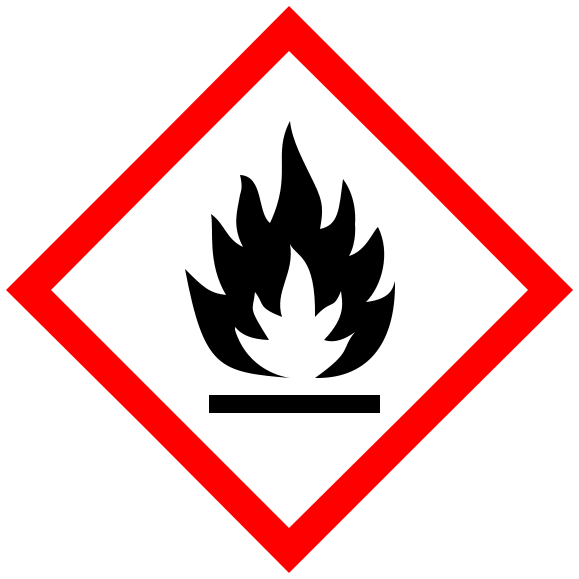  Buffers AL and AW1 contain guanidine salts: never mix with bleach (Qiagen handbook) [TO CONFIRM against the SDS]; Proteinase K: respiratory sensitiser; Ethanol: flammable |
| Downloads | Protocol: PDF · Word. Bench sheet: PDF · web page |
1 Purpose and scope
This protocol extracts genomic DNA from single arthropod specimens for DNA barcoding (e.g. Carabidae), with the Qiagen DNeasy Blood & Tissue Kit. Large specimens (> 1 cm) are sampled by removing legs; small specimens (< 1 cm) are digested whole with a non-destructive approach. Bulk samples for metabarcoding are covered in EnGeL-MOLB-DNA-MAG and EnGeL-MOLB-DNA-COL.
2 Principle
Tissue is digested overnight with Proteinase K in Buffer ATL. Buffer AL and ethanol create conditions for DNA to bind to the silica membrane of a spin column; two wash buffers remove contaminants, a dry spin removes residual ethanol, and DNA is eluted in warm Buffer AE (Qiagen, DNeasy Blood & Tissue Handbook).
3 Before you start
| Item | Details |
|---|---|
| Hands-on time | [TO CONFIRM] |
| Total time | Overnight lysis (10–12 h) plus c. [TO CONFIRM] for purification |
| Sample | Specimens > 1 cm: 3 legs from one side (usually the left). Specimens < 1 cm: whole individual (non-destructive). |
| Prepare in advance | Ethanol added to Buffers AW1 and AW2; precipitates in Buffers AL and ATL redissolved; incubator at 56 °C; frozen tissue equilibrated to room temperature |
| Key safety points | See Safety and waste |
4 Materials
4.1 Equipment
- Incubator or heat block at 56 °C
- Microcentrifuge (≥ 20 000 × g)
- Vortex mixer
- Fine forceps and scalpel or scissors for removing legs
- Heat block for warming Buffer AE [TO CONFIRM: temperature]
4.2 Consumables
- 1.5 mL and 2 mL microcentrifuge tubes
- DNeasy Mini spin columns and 2 mL collection tubes (in the kit)
- Filter tips
4.3 Reagents and kits
- Qiagen DNeasy Blood & Tissue Kit (Cat. No. 69504 or 69506), containing:
- Buffer ATL
- Proteinase K
- Buffer AL
- Buffer AW1 (add ethanol before first use)
- Buffer AW2 (add ethanol before first use)
- Buffer AE
- Alternative to Buffer AL: Buffer NL (NZYtech)
- Ethanol, 96–100%
5 Reagent preparation
- Buffers AW1 and AW2: add ethanol (96–100%) to the concentrates as stated on the bottles.
- Buffers AL and ATL: redissolve any precipitates before use.
- The kit can be stored at room temperature (15–25 °C) for up to 1 year unless otherwise stated on the label.
6 Procedure
6.1 Before starting
Clean the working space and material with bleach and water and leave the UV light on for at least 15 min.
Use filter tips at all steps.
Clean forceps and spatulas with 3% sodium hypochlorite and 96% ethanol between samples.
Perform all centrifugation steps at room temperature (15–25 °C).
Include an extraction blank [TO CONFIRM: number per batch].
6.2 Lysis
- Specimens > 1 cm: remove 3 legs from one side (usually the left) [TO CONFIRM: the source says the legs were “macerated one 1h after incubation”: when exactly are they macerated?]. Specimens < 1 cm: use the whole individual (non-destructive approach).
- Add 180 µL of Buffer ATL and 20 µL of Proteinase K. Mix by vortexing.
- Incubate at 56 °C until completely lysed (overnight, 10–12 h), vortexing occasionally.
- Vortex for 15 s.
- Optional, for non-destructive extraction: recover the specimen for the collection [TO CONFIRM: storage of the specimen].
6.3 DNA purification
- Add 200 µL of Buffer AL (or Buffer NL, NZYtech). Mix thoroughly by vortexing.
- Add 200 µL of 96–100% ethanol (210 µL if Buffer NL was used). Mix thoroughly by vortexing.
- Pipette the mixture into a DNeasy Mini spin column in a 2 mL collection tube. Centrifuge at ≥ 6 000 × g for 1 min. Discard the flow-through.
- Place the column in a new 2 mL collection tube. Add 500 µL of Buffer AW1. Centrifuge at ≥ 6 000 × g for 1 min. Discard the flow-through.
- Place the column in a new 2 mL collection tube. Add 500 µL of Buffer AW2. Centrifuge at 20 000 × g for 3 min. Discard the flow-through and the collection tube.
- Dry spin: place the column in a new collection tube and centrifuge at 20 000 × g for 2 min.
- Transfer the column to a new 1.5 mL or 2 mL tube. Add 200 µL of Buffer AE (previously warmed [TO CONFIRM: temperature]) to the centre of the membrane.
- Incubate at room temperature (15–25 °C) for 1 min. Centrifuge at ≥ 6 000 × g for 1 min to elute.
6.4 DNA storage and quality assessment
- Store the eluted DNA at 4 °C for short-term use or at −20 °C for long-term storage.
- Assess DNA purity by spectrophotometry (e.g. NanoDrop; A260/A280 and A260/A230 ratios) and quantify DNA concentration by fluorometry (e.g. Qubit), following EnGeL-MOLB-NANODROP and EnGeL-MOLB-QUBIT (or EnGeL-MOLB-PICOGREEN for plates). Record values in the database and the lab book.
6.5 After finishing
- Clean the bench with 70% ethanol.
- Empty the small bench bin into the right waste bin.
- Wash your hands.
- Turn off equipment and lights.
- Lock doors, fridge and freezer.
7 Calculations
Not applicable: volumes are per sample. For \(n\) samples, prepare \(V = v \times n \times 1.1\) of each buffer (\(v\): volume per sample, µL; 1.1: 10% excess).
8 Quality control
| Control | Purpose | Acceptance criterion |
|---|---|---|
| Extraction blank | Detect contamination | Processed through the PCR with the samples: no band on the gel, and < 5 ng/µL on the NanoDrop (regarded as noise) |
| DNA purity (EnGeL-MOLB-NANODROP) | A260/A280, A260/A230 | Ideal: A260/A280 1.8–2.0 and A260/A230 2.0–2.2. Values outside are flagged, not failed: the PCR decides |
| DNA concentration | Enough DNA for PCR | General rule: ≥ 10 ng/µL success; < 5 ng/µL fail; between 5 and 10 ng/µL the PCR result decides |
| Barcode PCR | DNA usable | Band of the expected size [TO CONFIRM] |
9 Data and metadata
- Sample labels: EnGeL label from the sample master data file (sample nature
DNAfor the extract, with the source specimen code kept in a separate column). - Where: lab book and project records [TO CONFIRM: barcoding records, e.g. Sanger recording sheet].
10 Safety and waste
Follow the manufacturer’s instructions and safety data sheets for each reagent. Biological samples are potentially hazardous and are handled following the facility’s procedures. EnGeL lab rules:
- Before you enter: wear your lab coat, use appropriate gloves, closed shoes only, tie back long hair.
- Not allowed: eating or drinking; touching phones or laptops with contaminated gloves; bags or coats on benches.
- Label all reagents (name, concentration, date) and treat all chemicals as hazardous.
Kit hazards (to be confirmed against the Qiagen SDS):
Buffers containing guanidine salts: do not add bleach or acidic solutions to guanidine-containing waste, as highly reactive compounds can form. Keep this waste separate from the bleach used for bench and tool cleaning.
Proteinase K may cause allergy or asthma symptoms if inhaled.
Ethanol and isopropanol are flammable (to be confirmed against the SDS). Keep away from flames and heat sources.
Waste
EnGeL waste streams (choose the right bin):
- Biological solid waste (black bin, white bag): contaminated gloves, contaminated disposable materials, solid biological laboratory waste, contaminated PPE. No liquids or sharps.
- Specific hazardous waste (red bin, red bag): chemicals and pharmaceuticals designated for this waste stream, specific hazardous laboratory waste, anatomical material; sharps only in a rigid sharps container. No loose sharps.
- Biological liquid waste (jerrican, UN 3291): liquid biological waste and contaminated biological liquids only. Use a funnel; rinse the original container and the funnel with dH2O and discard the rinse water in the same jerrican.
For this protocol: column flow-through goes to biological liquid waste (jerrican), never with bleach; columns, tubes and tips go to biological solid waste (black bin); unused or expired kit reagents go to the red bin.
11 Troubleshooting
| Problem | Likely cause | Solution |
|---|---|---|
| Tissue not completely lysed | Lysis too short | Extend the incubation at 56 °C (overnight, 10–12 h). |
| Low yield | [TO CONFIRM] | Optional second elution with Buffer AE [TO CONFIRM: used in the lab?] |
12 Remarks
Steps for blood and cultured cells in the Qiagen quick-start protocol are not used and have been left out. The generic Qiagen text kept in the lab’s older protocol list was retired on 2026-11-06.
13 References
Qiagen (n.d.). DNeasy Blood & Tissue Handbook (HB-2061) [TO CONFIRM: edition]. www.qiagen.com/HB-2061
14 Version history and citation
| Version | Date | Change | By |
|---|---|---|---|
| 1.0.0 | 2026-11-16 | First EnGeL-UC version, from the DNeasy Blood & Tissue quick-start protocol as adapted by Luísa Fraga for Carabidae DNA barcoding (2023; changes advised by Luís Cunha). | Luísa Fraga, Luís Cunha |
| 1.0.1 | 2026-11-17 | Authorship: all who contributed are authors, with their roles; lead author first where identified, reviewer (Luís Cunha) last. | Luís Cunha |
| 1.1.0 | 2026-11-20 | Acceptance criteria confirmed by Luís Cunha: extraction blank (no band after PCR, < 5 ng/µL on the NanoDrop), purity ranges as ideals (flagged, the PCR decides), concentration rule as for bulk extracts. | Luís Cunha |
| 1.1.1 | 2026-11-20 | GHS pictograms for ethanol (harmonised EU classification); kit buffers still to be checked against their safety data sheets. | Luís Cunha |
| 1.1.2 | 2026-11-20 | Cross-references to the nucleic acid QC protocols, now split into EnGeL-MOLB-NANODROP, EnGeL-MOLB-QUBIT and EnGeL-MOLB-PICOGREEN. | Luís Cunha |
How to cite
Fraga L, Cunha L (2026). DNA extraction from single arthropod specimens for DNA barcoding (Qiagen DNeasy Blood & Tissue Kit). EnGeL-UC protocol EnGeL-MOLB-DNA-BARC, version 1.1.2. Zenodo. DOI [TO CONFIRM].
Licence
Text: CC BY 4.0. Code: MIT. Logos are the property of their institutions and are not covered by the licence.
15 Open questions
- DOI.
- Leg sampling: when are the legs macerated (“one 1h after incubation” in the source)?
- Non-destructive specimens: how are they recovered and stored after lysis?
- Buffer AE temperature before elution; is a second elution used?
- Number of extraction blanks per batch.
- Where barcoding records are kept.
- Hands-on and total time.